Chapter 1 - The Dream Opens In Water
This version begins as if the earth is already dreaming of itself. Northern rivers, ducks on water, cranes in reeds, birds above wetland, bison on hills, a creek in recovering forest. The film does not begin with a classroom or a warning. It begins with refuge.
Refuge does not mean untouched. It means held. Named. Watched over. Sometimes fenced, sometimes mapped, sometimes repaired. The beauty of these images comes with that knowledge inside it. The land is not outside history, but it is not only history either.
The first chapter asks the viewer to slow down enough to believe in surfaces again: water, feathers, grass, snow, creek light. The analog treatment makes the images feel older than they are, as if the refuge footage has been recovered from a public television broadcast that aired late at night and stayed in the body.
Chapter 2 - The Hidden Order
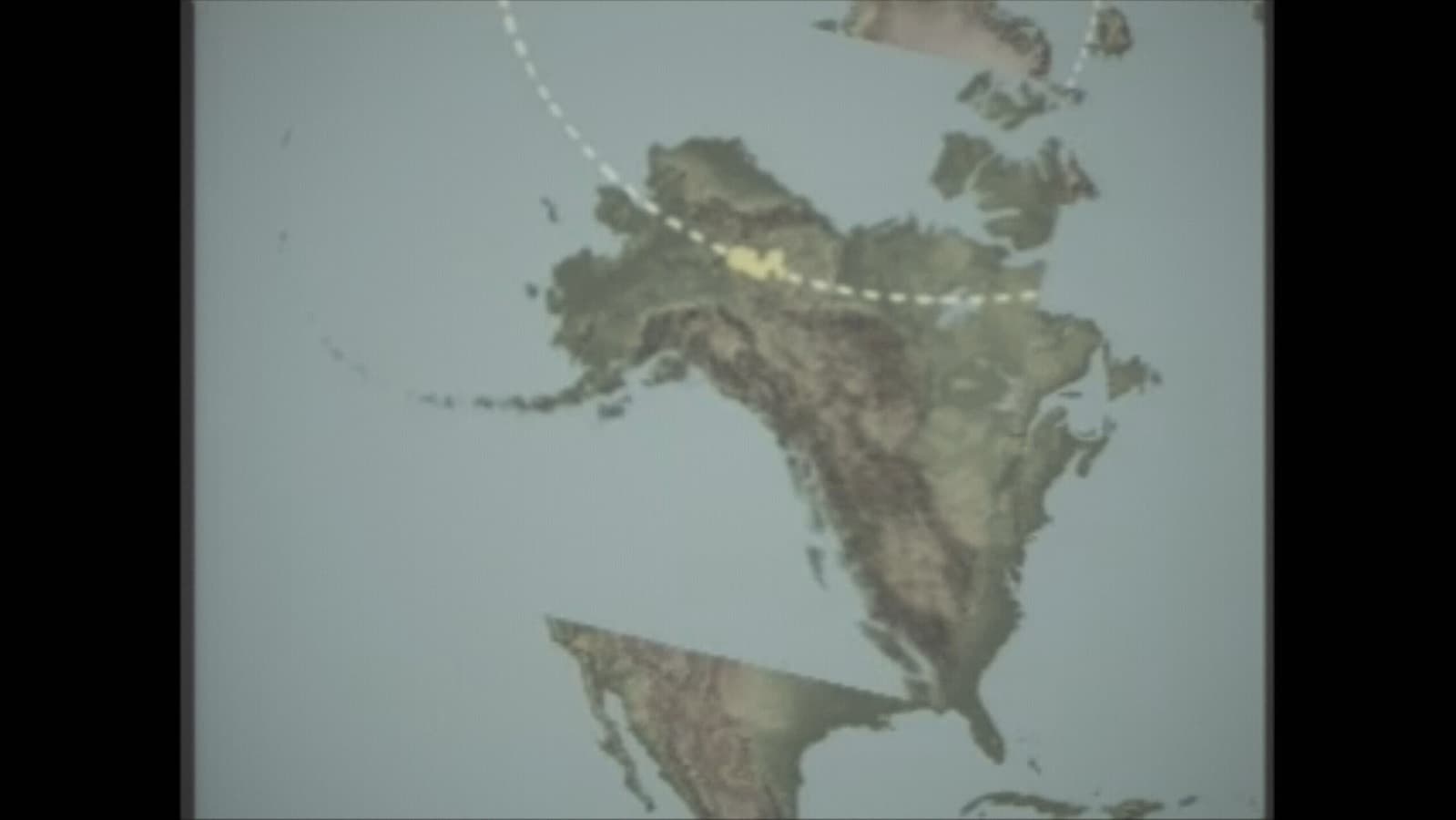
Maps enter gently. The refuge becomes range, boundary, green diagram. Then frog eggs appear, and the old classroom biology returns inside the dream. The film is saying that beauty has structure: patterns of breeding, migration, habitat, water, field, herd, and channel.
There is comfort in pattern, but also risk. Once something is patterned, it can be administered. Once it is administered, it can be saved or simplified. The chapter holds that tension without resolving it.
The river system at the end becomes the final equation. Water is the old teacher in all three versions of the film. It joins the classroom, the refuge, the city, the dam, the marsh, and the distant coast.
Chapter 3 - Tender Animals
Ducks, bird detail, whooping crane, deer, bison, crane flight, marsh stillness. This is the heart of the dream. The images are allowed to be beautiful without immediate interruption. The animals do not symbolize one thing. They are themselves first.
Still, the film cannot help arranging them like memory. The crane becomes a ceremony. The deer crossing water becomes a threshold. The bison becomes persistence. The bird becomes a small fact that resists the scale of maps.
The chapter ends in stillness because tenderness needs time. The listening path gives the sequence its soft blur, and the treatment makes the refuge feel like something half-remembered from childhood television.
Chapter 4 - The Coast Darkens
The coast enters through a crane, then a civic beach, then cold mountain air, crane flight over water, and finally a remote dark shoreline. This is where the dream admits another temperature.
A beach can be pleasure, but it can also be edge, weather, military geography, bird habitat, municipal optimism, or the place where a continent runs out. The Amchitka shoreline does not destroy the refuge dream, but it stains it. It reminds the viewer that no image is innocent once it belongs to an archive.
The chapter turns water into a threshold between beauty and knowledge.
Chapter 5 - History Interrupts
The bison archive and train image bring history forward. Refuge mural, waste flash, marsh return, desert marker, managed herd. This chapter is the film's admission that care is historical. It happens after loss. It carries the record of what made it necessary.
The waste flash is brief because this version does not want to live in waste, but it must acknowledge it. The marsh returns like a corrective breath. The desert marker extends the idea of refuge beyond wetland softness into dry, difficult land.
By the end of the chapter the bison are moving again, not as pure wildness, but as life inside a managed recovery. That is not a failure. It is the condition of the dream.
Chapter 6 - Warm System
The warmest chapter brings rolling bison hills, wetland birds, cranes, desert plants, ducks, and northern aerial release. It is almost utopian, but not quite. The images are too textured, too aged, too aware of their own mediation to become simple reassurance.
The title Turquoise Hexagon Sun suggests color and shape, and the edit answers with landforms, bodies, and repeated motifs: rounded backs, reed lines, wing spans, desert stalks, water surfaces. Geometry becomes organic. Organic life becomes pattern.
For a few minutes, the film lets the system feel benevolent.
Chapter 7 - Release
The final movement begins with a bicycle and then chooses flight over extraction. Crane flight, deer crossing, bison and road, desert vegetation, field walk, recovering creek, northern aerial fade-out. It is the gentlest ending of the three videos.
Even here, the road remains. The field walk remains. The human observer remains. Refuge is not the absence of people; it is a different way of being present. The dream is not that nature exists without us. The dream is that our presence might become quieter, more careful, more aware of its own shadow.
The final aerial is not an answer. It is a release. The camera rises, the land opens, and the film leaves the viewer with the feeling that recovery is possible, but only if it is allowed to remain unfinished.