Frame 01
The egg mass holds
A biological caption becomes an instruction in patience. Nothing moves, but the image teaches waiting.
A cabinet of frames that look instructional until they start watching back.
The Filmstrip Cabinet slows the moving image into a lesson. A bird becomes a diagram. A river becomes a sentence. A classroom still becomes a ritual object.
The Cabinet is also where the Reader admits that captions are never neutral. Every label is a little act of government, affection, fear, or memory.
The Filmstrip Cabinet is said to have come from a school board warehouse in Etobicoke, still carrying a typed inventory of pond life, rock classification, civic hygiene, and winter road safety.
The Cabinet's staff do not treat educational film as kitsch. They treat it as a serious moral technology: a way public institutions tried to teach children how to look at nature, systems, danger, work, and the nation.
Its best objects sit between instruction and trance. A caption card explains frog eggs, but the long pause before the next frame lets the room become strange on its own.
A biological caption becomes an instruction in patience. Nothing moves, but the image teaches waiting.
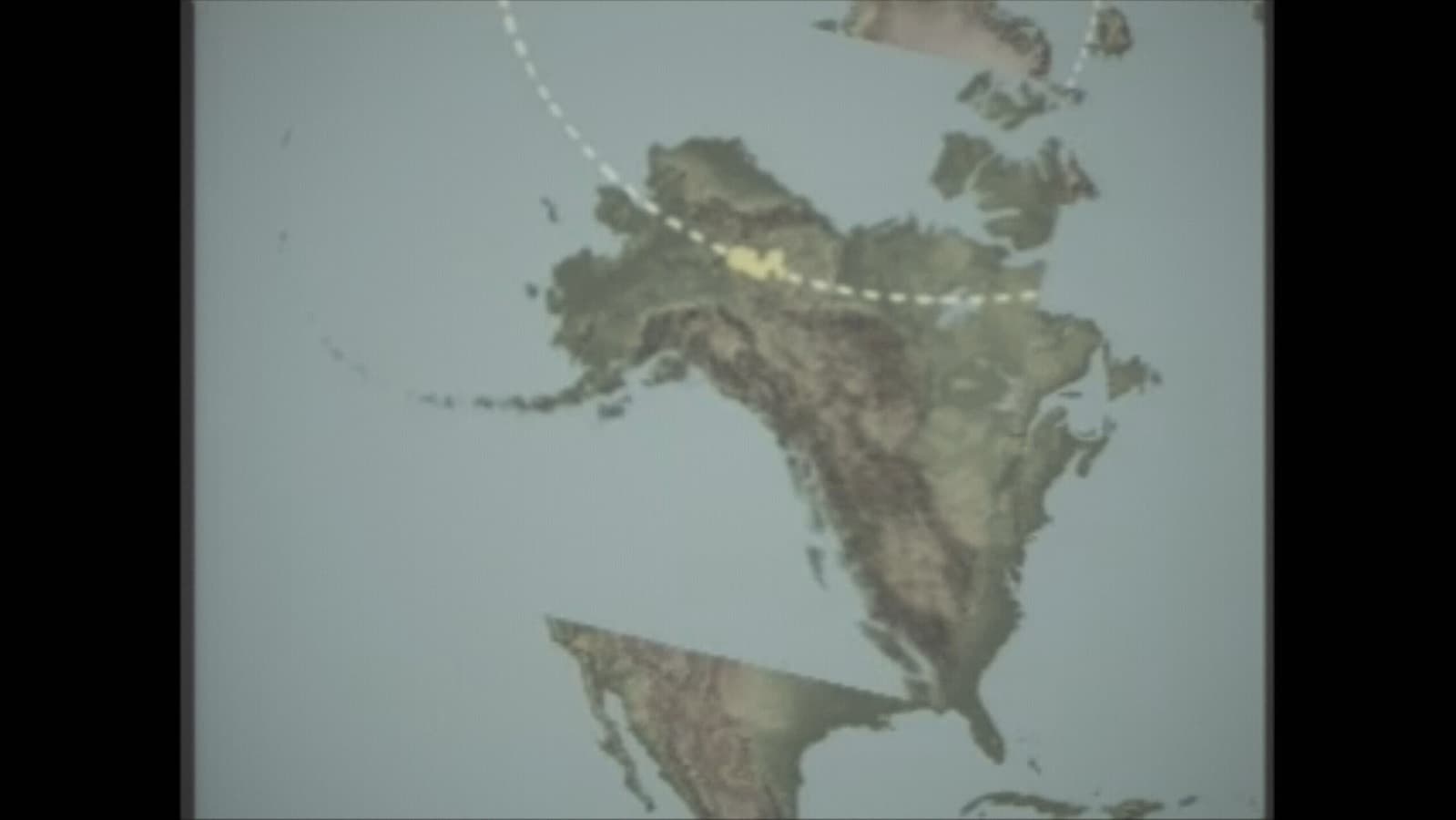
The northern frame refuses tourism. The distance feels measured, surveyed, and still not understood.
A bird becomes a white mark through wet grass, the simplest possible proof that the day is not empty.
Notes written as if for a classroom, but with enough uncertainty to let the image breathe.
Three frames repeated in a loop until biology, geography, and memory become the same lesson.
Dust, acetate, envelope glue, and the warm plastic of a projector that was not turned off.
These are the deep shelves for classroom reels, sponsored films, government explainers, and industrial films that accidentally became cultural memory.
The Reader owes a lot to public documentary tone: useful, patient, beautifully plain, and sometimes accidentally uncanny.